Thursday, January 17, 2008

Indian Paintings

Painting as an art form has flourished in India from very early periods as is evident from literary sources and also from the remnants that have been discovered.

Indian Paintings can be broadly classified as the murals & miniatures. Murals are huge works executed on the walls of solid structures. Classic examples are the paintings in Ajantha & Kailasantaha temple.

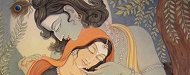
Miniature paintings are those executed on a very small scale on perishable material such as paper, cloth, etc., Though this style had been perfected by artisans under the various rules, not many remain today. Prime examples are the Rajasthani & Mughal miniatures.

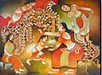
Contemporary artists have kept up to the times & excel in their modern works, giving free expression to their imagination & artistic liberty.
Ajanta murals
Temple murals
Kerala Fine Arts - www.kerala.com/kerala_arts/arts_kerala_finearts.php
Murals - www.kerala.com/kerala_arts/keralamurals.php
Chitramathil or the Wall of Cement Murals is on the walls of Sree Sankaracharya University of Sanskrit, Kalady, and a small hamlet in Ernakulam District of Kerala, India and also the birthplace of Jagadguru Adi Sankaracharya. It was a masterpiece creation of artist K.K.Suresh. It is 1200x 5 ft. long, unique compound wall around university campus depicting various themes from Hindu Mythology and Puranas. It received an entry in the Limca Book of Records (ref. Pg.93) for being the longest Mural Wall.
www.kerala.com:80/kerala_arts/muralarts.php
Raja Ravi Varma's paintings
Miniature Paintings
Tanjore Painting - Tamilnadu
Madhubani Painting - Bihar
Link to website on Madhubani paintings
http://www.southasianist.info/india/mithila/index.html
Kalamkari Painting - Kalahasti, Masulipatnam, Andhra Pradesh
Kalamkari Unit in Kalakshetra
Pithoro Painting - Gujarat


Contemporary Works
Sumathi's works
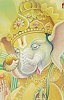
Images of 108 Ganeshas - paintings in traditional styles
sketches of sculptures, paintings done in Indian styles
art work on CDs
Sanatan Society is an association of students of the late Harish Johari, joining efforts to promote his teachings of Hindu philosophy, yoga, tantra, worship and love.

Harish Johari was a successful author, a gifted painter and sculptor, a lifetime scholar, an inspiring teacher, a splendid cook, an ayurvedic massage miracle, a wonderful chanter of mantras and a unique composer of Indian music. He is the inspiration for the entire sanatan society project and the painting tradition that is predominant in the site, which is justly named the Harish Johari Painting Tradition
www.sanatansociety.org

One of the last living pioneer of the orient arts (Bengal School), Sanat Chatterjee is an artist, sculptor, and is known for his exceptional detailing abilities and ambrosial compositions
www.sanat.in
Traditional Patachitra from Orissa by Priyanka Mishra
www.indianmasterpainters.com promotes contemporary Indian painters and artists
Masters Collection Art Gallery - Masters Collection is a 10 year old art gallery based in Kolkata. The gallery offers selected contemporary Indian art of renowned & emerging artists from India
www.myindianart.com
collection of tanjore & miniture paintings
www.giftpaintings.com
Visuals of paintings on the theme,"The Supreme power AUM" by Jayesh Kansara, Baroda, India
Reena Bhandari has been working as a professional painter since 2000. She works on oil paintings, water colours, Indian art, Europeon art etc. and is running an art school.
Visit her Photo Gallery
manishbha@yahoo.com
www.aspireauctions.com
a collection of miniature Indian paintings in September 2005 auctions
www.ishopindia.com
shop for classic Indian paintings, handicrafts
www.chitralakshana.com
provides information on the various concepts of Indian Art
www.cnkarunakaran.com
Karunakaran's works are noted for his highly stylised figures and the intricately decorative patterns that weave across the pictorial surface. Karunakaran started upon his particular idiom of heavily ornate, stylised figuration. Later, the figures evolved more, under the influence of Indian traditional murals and miniatures.
www.21stcenturyindianart.com
21st Century Indian Art
...But within fifty years, the Calcutta Group and the Progressive Artists of Bombay replaced the old Bengal School art. Now there is craving for change once again in the new century. Who are the new artists of the 21st century India? who among them are setting trends? Who will stand the test of time?
Geeta Vadhera's works
www.geetavadhera.com
S. Kanthan's works (Pen & Ink Drawings)
www.saigan.com/kanthan
Ilango's works (Oil Paintings)
www.saigan.com/ilango
Miniature paintings by Shalini, Delhi
www.ganeshaonline.com
Ganeshaonline is an art gallery wherein one can buy paintings of Lord Ganesha in various sizes, mediums.
www.icons-paintings.com
Hand painted religious icons on wood and abstract oil paintings by Ioan Popei.

Saturday, November 24, 2007

Something useful for bloggers

THE TOP FIVE WAYS TO IMPROVE YOUR BLOG...

Marketing is useless if you don't have a good 'product'. Here are five ways to ensure you do.

1. Provide something unique: There are so many blogs out there, even if you're writing brilliantly, you won't attract an audience if someone who's already more widely-read is writing on the same subjects. First-hand accounts or data, original research, surveys, original ideas, original graphics or photos or artwork, all help establish your uniqueness. World O'Crap, one of the newest and yet most popular Salon blogs, is written by a liberal who almost exclusively frequents right-wing conservative blogs and news sites, catches them in lies and exaggerations and inconsistencies, and then writes biting, hilarious satire about them. Unique, brilliant, and very funny.
2. Provide something valuable: Give readers a high 'return on their investment' in reading your blog by (a) entertaining them, (b) teaching or helping them to do something (lessons learned etc.), (c) informing them about something they need to know about, (d) giving them a 'take-away' (checklist, great quote, useful tool, etc. -- something that will cause them to immediately bookmark or blogroll or write about your site and revisit it often), (e) saving them time (distilling something down, analyzing it, researching it), or (f) providing deep insight about what something means (great graphics can help do this).
3. Be first: The first person to write about a particular topic will probably get a large share of traffic about it. Even if a more popular blog picks up on it, they're likely to link to you and send even more readers your way. First-hand accounts, on-the-spot photos, comments from people who were at the scene of breaking news all make fascinating reading. Even the first reviews and synopses of new movies and books usually attract a lot of attention.
4. Do your research: Invest time to learn as much as possible about what you're going to write about. Spend much more time reading and researching than you do writing. Check your facts. Learn to use search engines powerfully, so no time is wasted looking for just the right information. Don't neglect primary research -- stuff you get from offline sources like real people, in-depth television reports, people you can call or survey to get information that isn't available on the Web. Always cite and if possible link to your sources. Dig for great finds, stuff that isn't on the first page of the Google results, information that you need to go through multiple links to find, information embedded in the many databases that are online but aren't Googled at all. And never lie or exaggerate.
5. Learn to write very well: Master the art of story-telling. Learn to be brief without being too dense. Write in a conversational, accessible, friendly style. Eschew obscure and intimidating words, like 'eschew' (it means 'avoid' ;-) Ask people you trust to comment on your writing style. Use point form, examples, restatements for clarity. Be natural. Learn the 39 steps for story-writing; most of them apply to non-fiction, too. Have fun, be loose, show your emotion.


... AND THE TOP FIVE WAYS TO ATTRACT MORE ATTENTION TO IT

Once you've got a world class 'product', here's how to get people to look at it.

1. Use other media to pull people to your blog: Don't just write great stuff and wait to be discovered. Use e-mails (sparingly, selectively) to tell people you think might be interested in reading your blog about a particular article you've written. Make comments on others' blogs and include your blog URL when you do. Try to find an A-lister or two who might be interested in one of your articles, and e-mail them (just be aware many others are also looking for A-listers' attention, so do so sparingly and be patient). Or just comment, early and frequently, on A-listers' posts (first commenter on any new A-lister post often draws a lot of traffic). Join and participate in discussion groups, always leaving your blog URL at the end of every message. Contribute to e-magazines, either online versions of hard-copy periodicals like Ms., or specialized online journals like Virtual Occoquan. Use outgoing links on your blog and blogroll to articles and blogs written by people you'd like to have as readers: Chances are, they'll note you when they look at their inbound links list and come over to see what you said about them. And when people write to you, always answer, always acknowledge that they took the time, and always include your URL in your response. But don't feed the trolls (i.e. don't reply to readers who write hurtful, malicious or baiting comments or e-mails) or you'll have readers you don't want.
2. Write, at least sometimes, about 'hot' topics: You don't have to be a Googleslut to occasionally get some special buzz on a topic everyone is talking about. Being very focused on narrow, deep topics will get you a faithful readership, but not a particularly large one. Writing about something popular from time to time, especially if you do so before everyone else is writing about it, and say something unique or insightful, will broaden your audience, and bring in what Malcolm Gladwell calls connectors, people who can bring their entire, large networks of potential new readers to see your blog.
3. Make a great first impression: The average reader who links to your site looks at 1.5 pages and stays 90 seconds. Google hits command a small fraction of even that attention span. That's how long you have to make an impression that will bring them back. A memorable look, a powerful theme, easy navigation, legibility, making sure your links work and that you've spellchecked, using clear headings, clever, attractive graphics, summarizing your long posts, making sure your page doesn't take too long to load -- all these things help create a great first impression, and give your blog what's called 'stickiness'. The longer they stay, the more they'll remember and the more likely they'll come back.
4. Learn by studying who's reading what, and what works: I look at the end of each day who's been reading How to Save the World (most blogs have a 'referrer log' tool that lists your visitors; services like SiteMeter also provide this information). If I don't recognize a reader by their URL, I'll go to their site to see who they are and what brought them to my site (and often say 'thanks for visiting' while I'm there). And I track total popularity three ways (see chart above): Average hits/day per the Salon Rankings list, Number of Inbound Blogs per Technorati Cosmos (I also visit any new additions to my Inbound Blogs list), and Number of people subscribed to my RSS feed per Dave Winer's Who Subscribes List. I know that when I write about certain subjects like blogging or business innovation, I'll get a spike in hits. But I also know my posts on other subjects, like the environment, economics, and social networking, have different and loyal audiences, who I'd lose if I narrowed the focus of this blog. And some things, like poetry and short stories, I post despite knowing they have a very small audience, because the few comments I do get are essential to improving my writing skills. And because I love writing them.
5. Get outside more: Real Live Preacher, consistently one of the three most popular Salon Blogs, deliberately seeks out (looking at the Recent Updates List for unfamiliar blog names) and welcomes and helps new bloggers -- a tremendous way to get grateful new readers for his smartly written, well-laid-out blog. By using blog directories like EatonWeb or lists like Technorati's Current Events (or just typing a topic of interest in Technorati's search bar) you can find other bloggers interested in the same things you are, and connect with them. Or explore the blogrolls of blogs you like. When you find a 'like mind', link to them, e-mail them, comment on their weblog, or otherwise let them know you exist and where to find you. But don't be pushy and overtly ask them to link to you -- just let them know where you are, and they'll come around.

And finally: Be patient -- Viral marketing is very effective but takes time to work. Stick with what you're doing, especially if people are complimenting you -- word will spread, and the audience will come. And be yourself. If you try to affect a style that isn't 'you' it will come off as forced or dishonest.